
4-star hotel and VIP airport transfer services

Lifetime Support

No waitlist

No hidden fees

JCI International Certifications

Over 3,500 clients supported
Hair Transplant Recovery Journey: Common Complications and Facts
Learn the facts about hair transplant recovery. Discover how to distinguish normal side effects like swelling and shock loss from rare complications like necrosis, and get expert tips to ensure a safe, successful healing journey.

5 min read


For many people experiencing hair loss, a hair transplant is undoubtedly the most effective and permanent solution. Especially considering the high medical costs in countries like Australia, Turkey has become the global hub for this procedure. However, a quick search online can reveal vastly different price quotes.
So, what factors determine hair transplant prices? Why do some clinics offer more budget-friendly rates while others demand higher budgets? Here are the 5 fundamental factors that directly impact the cost of a hair transplant.
1. Completely Normal and Temporary Conditions After Hair Transplantation
Certain reactions your body displays within the first few weeks following the operation are concrete evidence that the healing process has actively begun. These are not complications; rather, they are natural components of the recovery cycle:
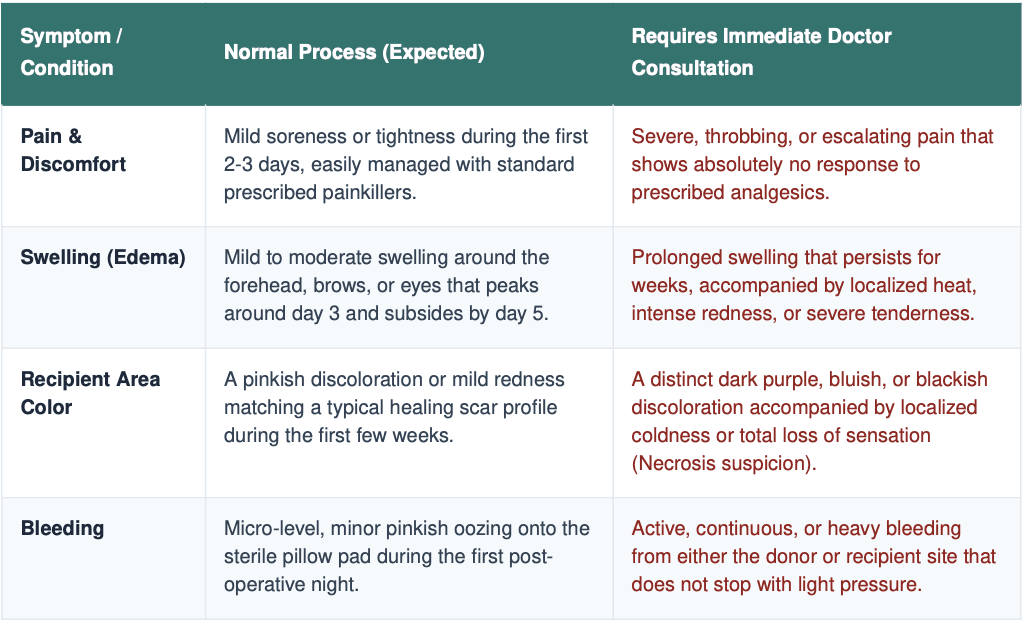
• Mild Edema and Swelling: Due to the effect of injected tumescent fluids and gravity, mild swelling may manifest around the forehead and eyes. This typically subsides spontaneously within 3 to 5 days.
• Crusting and Itching: As the micro-channels heal, tiny crusts form over the incisions. These crusts can trigger localised itching as they dry out and shed. With proper washing techniques, they are completely cleared around the 10th post-operative day.
• Shock Loss: This refers to the temporary shedding of transplanted hair strands between the 2nd and 4th weeks. This condition merely represents the hair follicles transitioning into a temporary resting phase and acts as a positive harbinger of healthy, permanent new hair growth.
2. Rare Complications and Effective Solutions
Although these risks are minimised when performing the procedure in an accredited clinic under expert hands, international medical standards require every patient to be well-informed regarding these scenarios and their straightforward solutions:
Mild Infection Risks: In cases where the clinical environment lacks absolute sterility or the patient neglects post-operative hygiene guidelines, minor pimples or localised mild infections may occur within the recipient site. These are easily brought under complete control within a few days using topical antibiotic creams or a brief course of oral antibiotics prescribed by your physician.
What is Necrosis? Should You Really Be Afraid?
One of the terms most frequently encountered—and misunderstood—by patients researching hair transplant risks online is "necrosis". By definition, necrosis is a localised tissue perfusion issue resulting from an inadequate blood and oxygen supply to a specific area. Its actual incidence in professional hair transplantation is well under 1%.
Necrosis typically stems from severe technical errors committed in uncertified, "under-the-counter" establishments lacking qualified medical experts. These errors include attempting to implant excessively dense grafts into a highly restricted surface area or miscalculating the dosage of local vasoconstrictors (such as adrenaline).
A specialised physician carefully monitors the blood circulation of both the donor and recipient areas throughout the entire operation. When utilising modern, precise modalities like Sapphire FUE or DHI alongside correct channel-opening angles, the risk of necrosis is virtually non-existent. Furthermore, when detected in its earliest stages, it can be managed effectively with professional wound care dressings and targeted medical treatments without leaving permanent scars.
STATUS ANALYSIS: DISTINGUISHING NORMAL RECOVERY FROM DOCTOR CONSULTATION
3. Golden Rules to Minimise Complication Risks to Near Zero
Ensuring a comfortable, seamless, and risk-free hair transplant journey depends heavily on your clinical choices and post-operative discipline:
• Clinic and Surgeon Selection: Ensure your procedure is performed exclusively within a fully equipped hospital or licensed surgical medical centre under the direct supervision of a qualified, specialised doctor. Avoid prioritizing cost over safety; instead, thoroughly evaluate the clinic's track record and clinical credentials.
• The Critical First 48 Hours: Completely protect the recipient area from any form of friction, pressure, or accidental impact. Adhere strictly to the recommended semi-upright sleeping position to facilitate rapid fluid drainage.
• Smoking and Alcohol Restrictions: Nicotine significantly compromises microvascular circulation, reducing tissue oxygen levels and directly impairing graft survival (acting as a primary trigger for perfusion issues). Pausing smoking and alcohol intake for at least one week before and after the operation is vital.
Conclusion
A hair transplant is a life-changing aesthetic investment that significantly restores personal confidence. Just as with any minor surgical intervention, temporary physiological side effects are a natural part of the body's self- repair mechanism. Through precise medical planning, an expert surgical team, and meticulous post-operative compliance, achieving the natural, dense, and permanent hair coverage you desire is a completely safe and highly predictable milestone.
Hair Transplant Recovery: Frequently Asked Questions (FAQ)
1. Is swelling around the forehead and eyes normal after a hair transplant?
Yes, it is completely normal and temporary. Mild edema and swelling may manifest around the forehead and eyes due to the effect of injected tumescent fluids and gravity. This is not a complication and typically subsides spontaneously within 3 to 5 days.
2. When do the crusting and itching after the procedure go away?
As the micro-channels heal, tiny crusts form over the incisions, which can trigger localised itching as they dry out and shed. This is concrete evidence that the healing process has actively begun. With proper and regular washing techniques, these crusts are completely cleared around the 10th post-operative day.
3. What is "shock loss," and is it a sign of procedure failure?
Absolutely not. In fact, it acts as a positive harbinger of healthy, permanent new hair growth. Between the 2nd and 4th weeks following the operation, the transplanted hair strands temporarily shed. This condition merely represents the hair follicles transitioning into a temporary resting phase to renew themselves.
4. What is "necrosis," which is frequently mentioned online, and how often does it occur?
By definition, necrosis is a localised tissue perfusion issue resulting from an inadequate blood and oxygen supply to a specific area. In professional, certified clinics, the actual incidence of this risk is well under 1%. It typically stems from severe technical errors committed in uncertified, "under-the-counter" establishments lacking qualified medical experts (such as attempting to implant excessively dense grafts or miscalculating the dosage of adrenaline). When utilising modern, precise modalities like Sapphire FUE or DHI under the supervision of a specialised physician, the risk of necrosis is virtually non-existent.
5. Why are the first 48 hours after the operation so critical to minimise complication risks?
The first 48 hours are the most delicate window to ensure the transplanted grafts anchor securely without damage. During this time, the recipient area must be completely protected from any form of friction, pressure, or accidental impact. Additionally, you must adhere strictly to a semi-upright sleeping position to facilitate rapid fluid drainage.
Start Your Journey with Medivelle Australia
Ready to take the first step toward restoring your hair and confidence? You don't have to figure out the preparation alone. At Medivelle, we guide our Australian patients through every single step of the process—from your initial photo evaluation to your VIP transfers and lifelong follow-up care.
👉 Click Here to Claim Your Free Virtual Consultation with Medivelle Today!
Our medical experts will analyse your hair loss, estimate your required grafts, and design a personalised Istanbul travel plan just for you.