
4-star hotel and VIP airport transfer services

Lifetime Support

No waitlist

No hidden fees

JCI International Certifications

Over 3,500 clients supported
Bleeding and Scabbing After Hair Transplant: What is Normal?
Wondering about post-op recovery? Learn why bleeding and scabbing look different for everyone after a hair transplant and what to expect during your healing journey.

6 min read

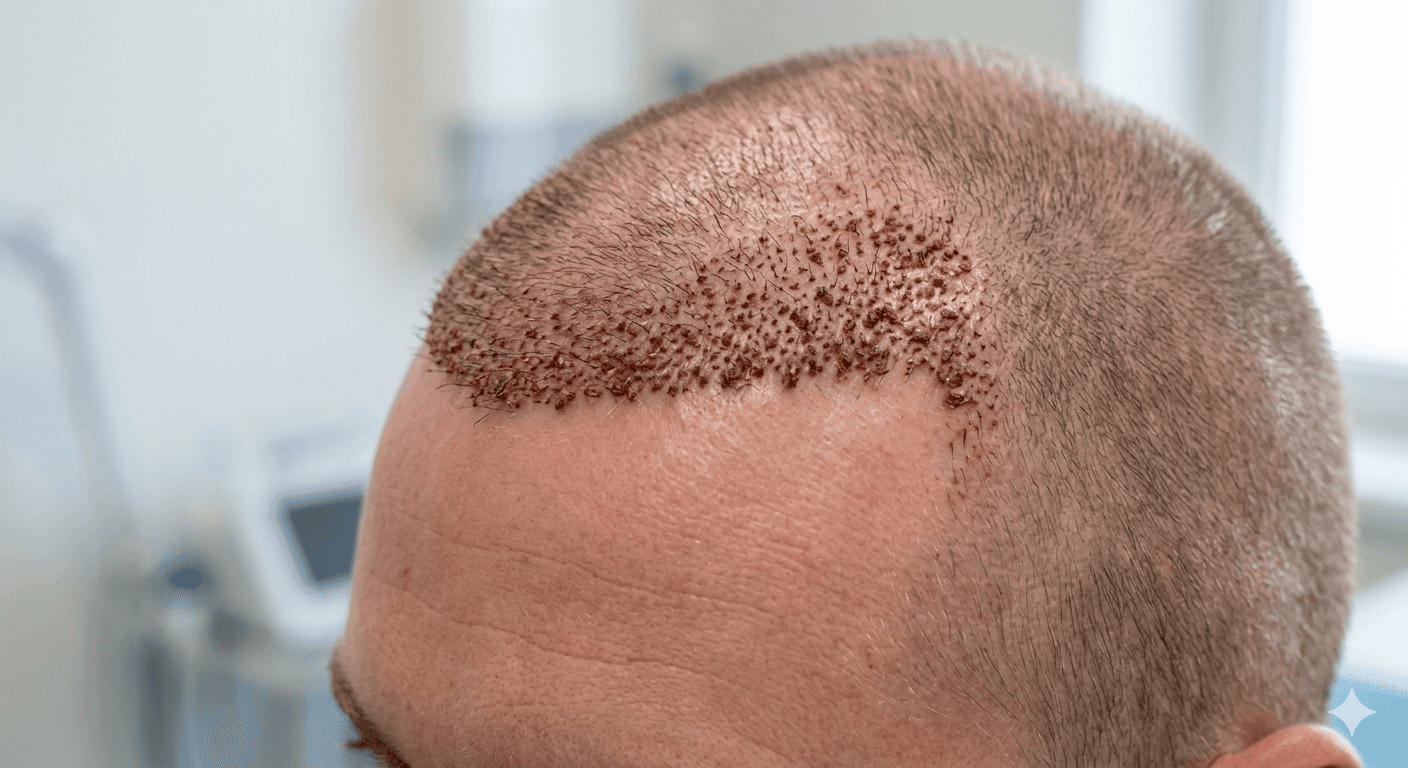
Is Bleeding Normal After a Hair Transplant?
One of the most frequently asked questions among individuals considering a hair transplant is whether bleeding can occur during or after the procedure. Given the wide range of information available online, it is common to encounter differing opinions and experiences on this topic. At Medivelle Australia, we believe that prospective patients deserve clear, medically accurate insights into what to expect during their international patient journey. A hair transplant involves extracting hair follicles from a donor area and placing them into designated recipient sites on the scalp. Because this process may require creating numerous micro-incisions or implantation points, the possibility of minor bleeding or fluid seepage is often a concern for prospective patients.
Following the procedure, some individuals may notice small traces of dried blood, pinpoint bleeding marks, or mild oozing from the scalp during the first few hours. The presence and extent of these observations can vary depending on several factors, including the technique used, the scope of the procedure, the characteristics of the scalp, and individual biological differences. For this reason, post-procedure experiences are not identical for every person.
The body's natural response to minor tissue disruption also plays a role in this process. Blood clotting is a complex physiological mechanism that helps control bleeding when blood vessels are damaged. Various cells, proteins, and biological processes work together to support this natural response.
In many medical settings, healthcare professionals may review an individual's medical history and certain laboratory findings before a procedure. Information such as blood count results, coagulation-related parameters, and other health indicators may be considered in the overall planning process. The specific evaluations performed can vary depending on the individual circumstances and the nature of the procedure.
It is also important to recognise that biological characteristics differ from person to person. Factors such as age, genetics, skin characteristics, medications, overall health status, and other individual variables may influence what is observed during the post-procedure period. Consequently, the experience of one individual should not be assumed to represent the experience of another.
This variation is often reflected in photographs shared online after hair transplant procedures. Some images may show more noticeable crusting or dried blood residue, while others appear considerably different. Such differences can be influenced by the timing of the photograph, lighting conditions, image quality, and individual healing characteristics, among other factors.
As a result, bleeding after a hair transplant remains one of the most commonly researched topics among those exploring the procedure. However, individual experiences may vary considerably, and online images or personal accounts should not be regarded as representative of every case.
Disclaimer: This content is provided for general informational purposes only and does not constitute medical advice, diagnosis, treatment, or any form of healthcare recommendation.
Hair Transplant Scabs: Why Do They Look Different From One Person to Another?
Scabbing after a hair transplant is one of the most frequently researched topics among individuals considering the procedure. Many prospective patients compare post-procedure photographs online and notice that some people appear to have more visible scabbing, while others show only minimal signs. This often leads to an important question: why does scabbing after a hair transplant look different from person to person?
During a hair transplant procedure, hair follicles are carefully placed into recipient areas of the scalp through numerous micro-sized implantation sites. As part of the body's natural response to this process, small scabs may develop as the scalp progresses through its recovery phase. While this is a commonly observed aspect of the post-procedure appearance, the way scabbing presents can vary considerably between individuals.
One of the primary reasons for these differences is the scope of the procedure itself. Not every hair transplant involves the same number of grafts or the same treatment area. Procedures performed over larger regions of the scalp may naturally result in a different visual appearance compared to treatments focused on smaller areas. For this reason, comparing photographs of different individuals does not always accurately reflect what another person may experience.
Individual scalp characteristics can also influence how the scalp appears following a hair transplant. Factors such as skin texture, natural oil production, and other personal biological traits may contribute to visible differences, even when the same technique is used.
Another important factor is timing. The appearance of the scalp can change significantly throughout the days following a hair transplant. A photograph taken shortly after the procedure may look very different from one captured several days later. Without knowing exactly when an image was taken, it can be difficult to make meaningful comparisons between different cases.
Photography conditions themselves can also play a significant role. Close-up images, high-resolution cameras, bright lighting, and specific camera angles may make scabs appear more noticeable than they do in everyday settings. In some cases, photographs of the same individual taken under different lighting conditions can create remarkably different impressions.
It is also worth considering that images shared on social media platforms, forums, and online communities often represent only a single moment in an ongoing process. The appearance of the scalp continues to evolve over time, meaning that a single photograph may not accurately reflect the broader progression of recovery.
In addition, every individual experiences biological processes differently. The human body does not respond in exactly the same way for every person, and visible changes following a hair transplant may vary based on individual characteristics. Such variations are not unique to hair transplantation and can be observed across many aesthetic and surgical procedures.
Ultimately, scabbing after a hair transplant is one of the most discussed aspects of the post-procedure period. However, online images rarely represent identical circumstances. Factors such as treatment area size, individual scalp characteristics, the timing of photographs, and imaging conditions can all influence how scabbing appears. Rather than comparing one person's photographs directly to another's, it is often more useful to recognise that every hair transplant journey is unique and may present differently from case to case.
Start Your Journey with Medivelle Australia
Ready to take the first step toward restoring your hair and confidence? You don't have to figure out the preparation alone. At Medivelle, we guide our Australian patients through every single step of the process—from your initial photo evaluation to your VIP transfers and lifelong follow-up care.
👉 Click Here to Claim Your Free Virtual Consultation with Medivelle Today!
Our medical experts will analyze your hair loss, estimate your required grafts, and design a personalized Istanbul travel plan just for you.