
4-star hotel and VIP airport transfer services

Lifetime Support

No waitlist

No hidden fees

JCI International Certifications

Over 3,500 clients supported
Türkiye vs. Taiwan: A Comparison of Quality and Experience in Medical Tourism and Hair Transplantation
Turkey or Taiwan for hair transplantation? Compare both destinations based on surgical expertise, clinical technology, costs, and international patient care.

7 min read

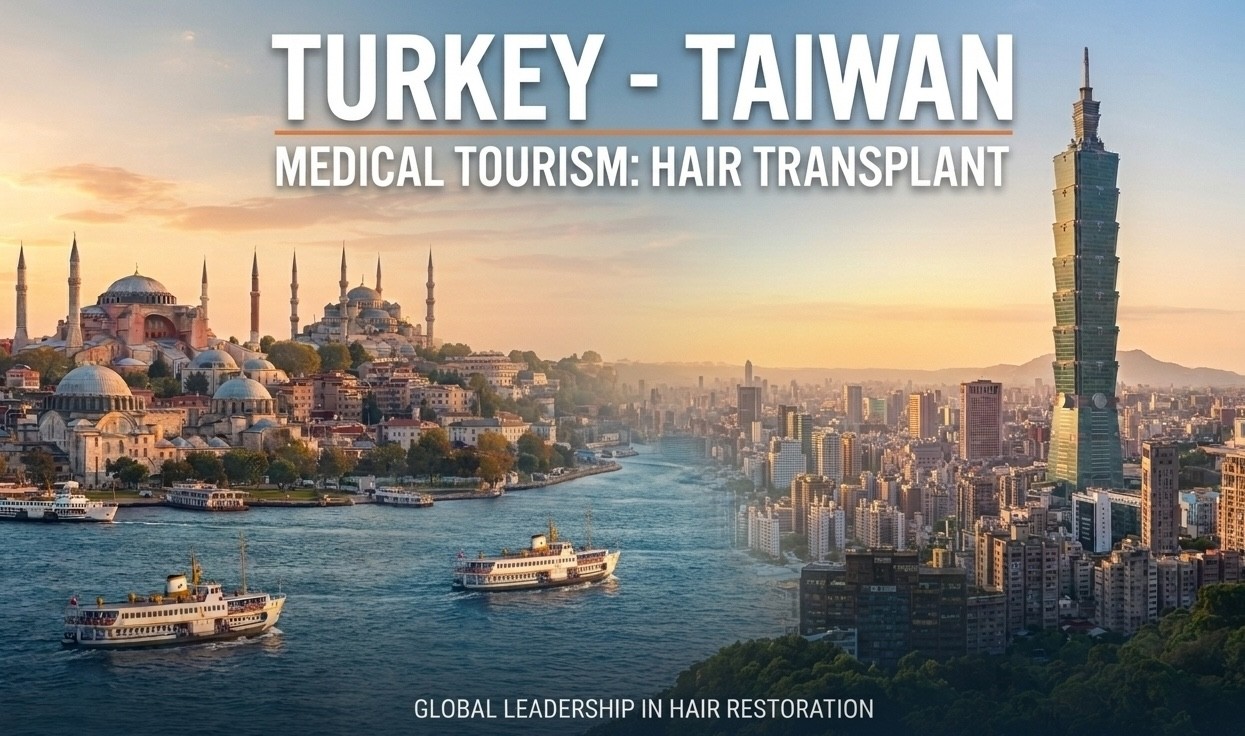
As the global medical tourism market continues to expand, Taiwan has emerged as a technologically advanced healthcare destination in Asia, attracting patients who value modern medical infrastructure and high clinical standards. Türkiye, meanwhile, has established itself as one of the world’s leading destinations for hair transplantation and international medical tourism.
When it comes to hair transplantation—an elective surgical procedure with long-lasting aesthetic results—cost should never be the only factor considered. The experience of the medical team, the surgeon’s expertise, the diversity of cases treated, technological infrastructure, patient safety, and long-term post-operative care are equally important.
In this context, Türkiye and Taiwan offer two different strengths. Taiwan is known for its advanced healthcare system, technological capabilities, and strong medical education, while Türkiye has developed exceptional specialisation and international experience in hair transplantation and medical tourism.
Experience and Global Medical Tourism Infrastructure
Türkiye is internationally recognised as one of the leading destinations for medical tourism, particularly for hair transplantation. Over the past several decades, the country has developed a highly specialised ecosystem serving international patients from Europe, the Middle East, North America, Australia, Africa, and many other regions.
The scale of the industry has encouraged significant investment in specialised hair transplantation clinics, internationally oriented hospitals, multilingual patient services, and dedicated medical tourism infrastructure.
Türkiye’s healthcare system operates under national regulatory frameworks, while many institutions serving international patients have also pursued international accreditation and quality standards. The country has consequently developed an integrated model of medical tourism in which treatment can be combined with airport transfers, accommodation, multilingual patient coordination, pre-operative consultation, and structured post-operative follow-up.
For international hair transplant patients, this established infrastructure can be particularly valuable. Many experienced clinics maintain digital communication with patients after they return to their home countries and monitor the recovery process over several months.
Taiwan, on the other hand, has one of Asia’s most developed healthcare systems and is particularly well known for advanced medicine, modern hospitals, highly trained medical professionals, and sophisticated healthcare technology.
Its medical tourism sector is supported by a strong domestic healthcare infrastructure and internationally respected medical institutions. Taiwan is especially prominent in areas such as advanced surgery, medical technology, diagnostics, and specialised treatments.
However, Taiwan’s medical tourism industry is not as heavily concentrated around hair transplantation as Türkiye’s. Hair restoration is available, but it represents a smaller and more specialised segment of the overall healthcare market.
Therefore, while Taiwan offers a highly developed healthcare environment, Türkiye has a more extensive international ecosystem specifically built around hair transplantation.
Medical Education and Surgical Expertise
The quality of the medical team is one of the most important factors determining the safety and success of a hair transplantation procedure.
Türkiye has a large and highly competitive community of physicians and medical professionals working in hair restoration. Depending on the clinic and treatment model, procedures may be performed under the supervision of dermatologists, plastic surgeons, or physicians with extensive experience in hair transplantation.
Türkiye’s long-standing position in the global hair restoration industry has also given its medical teams considerable exposure to different surgical techniques and patient profiles. Turkish physicians and clinics participate in international professional organisations, conferences, and scientific networks related to hair restoration and aesthetic medicine.
Taiwan has a strong medical education system and a highly qualified physician workforce. Taiwanese doctors benefit from a healthcare environment known for rigorous medical training, advanced hospitals, and a strong emphasis on evidence-based medicine.
From a general medical perspective, Taiwan therefore offers a highly credible healthcare environment.
The distinction lies primarily in specialisation and volume of hair transplantation cases. Türkiye has developed an exceptionally large hair restoration sector, meaning that experienced Turkish surgeons may perform or supervise a substantially higher volume of hair transplantation procedures than physicians whose primary focus is another medical specialty.
For patients, the key consideration should therefore be the individual surgeon’s specific experience in hair restoration rather than simply the country in which the procedure is performed.
Anatomical Compatibility and Diversity of Cases
Hair transplantation requires a highly individualized approach.
Hair thickness, follicular orientation, donor density, scalp characteristics, hairline shape, and the natural direction of hair growth can vary significantly between individuals and ethnic groups.
Türkiye’s international patient base provides its hair transplantation sector with exposure to a very broad range of hair types. Clinics routinely encounter patients from Europe, the Middle East, North America, Australia, Africa, and Asia.
This diversity can be especially valuable when treating patients with fine hair, curly or tightly textured hair, advanced hair loss, limited donor density, or previous unsuccessful transplantation procedures.
Taiwanese clinics naturally have extensive experience treating Asian patients. Asian hair characteristics can differ from those commonly seen in European, Middle Eastern, or African patients, including variations in hair shaft thickness, follicular angle, density, and growth patterns.
This does not mean Taiwanese surgeons are unable to treat international patients. Rather, patients traveling to Taiwan should examine whether the individual surgeon has substantial experience treating patients with similar hair and scalp characteristics.
For someone with an uncommon or particularly challenging hair type, previous international case experience can therefore be an important factor when selecting a clinic.
Technology, Innovation, and Clinical Investment
Technology is an important component of modern hair restoration, but technology alone does not determine the final result.
Türkiye has become one of the world’s most prominent markets for advanced hair transplantation techniques, including FUE and DHI. Specialised implantation instruments, sapphire blades, advanced clinical equipment, and improved anesthesia techniques are widely available across the sector.
The highly competitive Turkish hair transplantation market has also encouraged clinics to continuously invest in technology, equipment, specialised operating environments, and patient-care systems.
Taiwan has a different but equally notable technological advantage. The country is internationally recognised for its advanced healthcare technology, modern hospital infrastructure, medical research capabilities, and sophisticated surgical equipment.
In terms of the broader healthcare technology ecosystem, Taiwan is therefore exceptionally strong.
However, there is an important distinction between general medical technology and specialised hair transplantation experience.
A clinic may possess highly advanced medical equipment while having comparatively limited experience performing large numbers of hair transplantation procedures. Conversely, a highly specialised hair restoration clinic may achieve excellent outcomes through established techniques combined with exceptional surgical experience.
For this reason, patients should evaluate not only the technology available but also how effectively it is used in hair restoration.
Post-Operative Care and Long-Term Follow-Up
Hair transplantation is a long-term process rather than a procedure whose success can be evaluated immediately after surgery.
The transplanted follicles require time to establish themselves, and visible growth develops gradually over the following months. The final aesthetic outcome is typically evaluated over a much longer period.
For international patients, post-operative communication is therefore particularly important.
Türkiye’s mature medical tourism industry has led many established clinics to develop dedicated international patient departments. Patients may receive post-operative instructions, photograph-based assessments, medication guidance, and digital follow-up after returning to their home countries.
Some clinics offer follow-up programs extending for 12 months or longer.
Taiwan’s healthcare system also places a strong emphasis on structured medical follow-up and patient safety. However, because international hair transplantation represents a smaller segment of Taiwan’s medical tourism market, the specific post-operative services available to foreign hair transplant patients can vary considerably between clinics.
Patients should therefore ask in advance:
Who will monitor my recovery after I return home?
How long will post-operative follow-up continue?
Can I communicate directly with the medical team?
What happens if a complication occurs after I return home?
Does the clinic provide a written treatment or guarantee policy?
What exactly is included in the price?
These questions can be more important than the initial price difference between countries.
Why Is Taiwan Attractive for Medical Tourism?
Taiwan’s appeal as a medical destination is based primarily on the strength of its healthcare system, advanced technology, medical expertise, and modern hospital infrastructure.
The country is particularly attractive to patients who prioritise sophisticated medical environments, technological capabilities, and access to highly trained physicians.
Taiwan also benefits from its strong position within the broader Asian healthcare market.
However, its strengths are distributed across a wide range of medical specialties rather than being concentrated specifically in hair transplantation.
Türkiye has developed a different model. Hair transplantation has become one of the country's most internationally recognised medical tourism specialties, resulting in a large network of clinics and professionals dedicated specifically to hair restoration.
Which Country Is Better for Different Hair Types?
For patients with complex hair characteristics, Türkiye may offer an important advantage because of the diversity and volume of international hair transplantation cases treated by its established clinics.
Patients with fine hair, curly or tightly textured hair, low donor density, advanced hair loss, or previous unsuccessful procedures should pay particular attention to whether the surgeon has successfully treated patients with comparable characteristics.
Taiwan may be particularly appealing to patients who value its advanced healthcare infrastructure and who can identify a surgeon with extensive, relevant hair restoration experience.
Ultimately, however, the surgeon’s individual expertise is more important than the country itself.
Patients should evaluate:
The surgeon’s medical qualifications
Specific experience in hair transplantation
Number and type of procedures performed
Before-and-after results
Donor-area management
Hairline design
Graft extraction and implantation techniques
Clinical safety standards
Post-operative follow-up
Türkiye vs. Taiwan: The Key Difference
The fundamental difference between Türkiye and Taiwan is not simply medical quality.
Both countries have developed strong healthcare systems, but their areas of specialisation are different.
Taiwan is recognised for advanced healthcare, medical technology, highly trained physicians, and sophisticated hospital infrastructure.
Türkiye, meanwhile, has developed exceptional specialisation in hair transplantation, supported by decades of international patient experience, a large specialised clinic ecosystem, and extensive exposure to diverse hair types.
For a patient specifically seeking a hair transplant, this distinction is important.
A country may be highly advanced in general medicine without being one of the world’s largest specialised hair transplantation markets. Conversely, a country with a highly specialised hair restoration industry may offer greater procedure-specific experience.
Frequently Asked Questions (FAQ)
1. Is Taiwan a good country for medical tourism?
Yes. Taiwan has a highly developed healthcare system, modern medical infrastructure, advanced technology, and well-trained medical professionals.
Its strengths are particularly evident in advanced medical and surgical specialties. However, patients specifically seeking hair transplantation should evaluate the experience of the individual clinic and surgeon rather than relying solely on Taiwan’s overall healthcare reputation.
2. Which country is better for hair transplantation: Türkiye or Taiwan?
For patients specifically seeking hair transplantation, Türkiye generally has an advantage in terms of the size and maturity of its specialised hair restoration industry and its extensive experience with international patients.
Taiwan offers a highly developed healthcare environment, but hair transplantation is a smaller component of its overall medical tourism sector.
3. Which country is better for patients with different hair types?
Türkiye may offer an advantage because its large international patient base exposes clinics to a wider range of hair and scalp characteristics.
However, the surgeon’s individual experience remains the most important factor. Patients should look for documented results involving hair types and levels of hair loss similar to their own.
4. How important is technology in choosing a hair transplant clinic?
Technology is important, but it should not be the primary deciding factor.
FUE, DHI, sapphire blades, specialised implantation devices, and other technologies can support a successful procedure, but they cannot replace surgical expertise, proper planning, careful graft handling, and appropriate donor management.
5. What should international patients consider before choosing a clinic?
International patients should consider much more than the advertised price.
Before booking a procedure, they should verify the surgeon’s qualifications, the clinic’s regulatory status, the medical team performing the procedure, the number of grafts recommended, the treatment plan, previous results, complication management, and the scope of post-operative follow-up.
Final Verdict: Türkiye or Taiwan?
Türkiye and Taiwan are both credible healthcare destinations, but they offer different advantages.
Taiwan stands out for its advanced healthcare infrastructure, medical technology, strong physician training, and sophisticated hospital environment.
Türkiye stands out for its specialised expertise in hair transplantation, extensive international patient experience, large-scale hair restoration infrastructure, and exposure to a highly diverse range of hair types and clinical cases.
For a patient whose primary goal is hair transplantation, Türkiye may therefore offer a stronger combination of specialisation, international experience, and procedure-specific expertise.
For patients who prioritise Taiwan’s broader healthcare technology and medical infrastructure, Taiwan can also be a compelling option—provided that they select a surgeon with proven, specialised experience in hair restoration.
Ultimately, the safest approach is not to choose a country based solely on reputation or price. The decision should be based on the individual surgeon, clinic standards, treatment plan, surgical experience, patient safety, and long-term follow-up.
When it comes to hair transplantation, the best result is rarely determined by the lowest price or the newest technology. It is determined by the right diagnosis, the right surgical plan, the right medical team, and the right long-term care.
Start Your Journey with Medivelle Australia
Ready to take the first step toward restoring your hair and confidence? You don't have to figure out the preparation alone. At Medivelle, we guide our Australian patients through every single step of the process—from your initial photo evaluation to your VIP transfers and lifelong follow-up care.
👉 Click Here to Claim Your Free Virtual Consultation with Medivelle Today!
Our medical experts will analyse your hair loss, estimate your required grafts, and design a personalised Istanbul travel plan just for you.